Address the issues
Screen time: tech with intention
In an age of digital distractions, we all struggle with attention and deep focus. Students who emerge from this era with discipline, clarity of thought, and focus will thrive.
But with Chromebooks replacing textbooks, and pencil-and-paper giving way to screens, we naturally wonder if this is truly progress. Does technology impact kids' ability to stay on task and accomplish deep learning?
“There's clear scientific evidence that digital tools impair rather than enhance student learning.” The Karolinska Institute (2023)
For a critical perspective I recommend The Digital Delusion: How Classroom Technology Harms Our Kids' Learning—and How to Help Them Thrive Again by Jared Cooney Horvath, from which I pulled the above quotation.
The Evidence
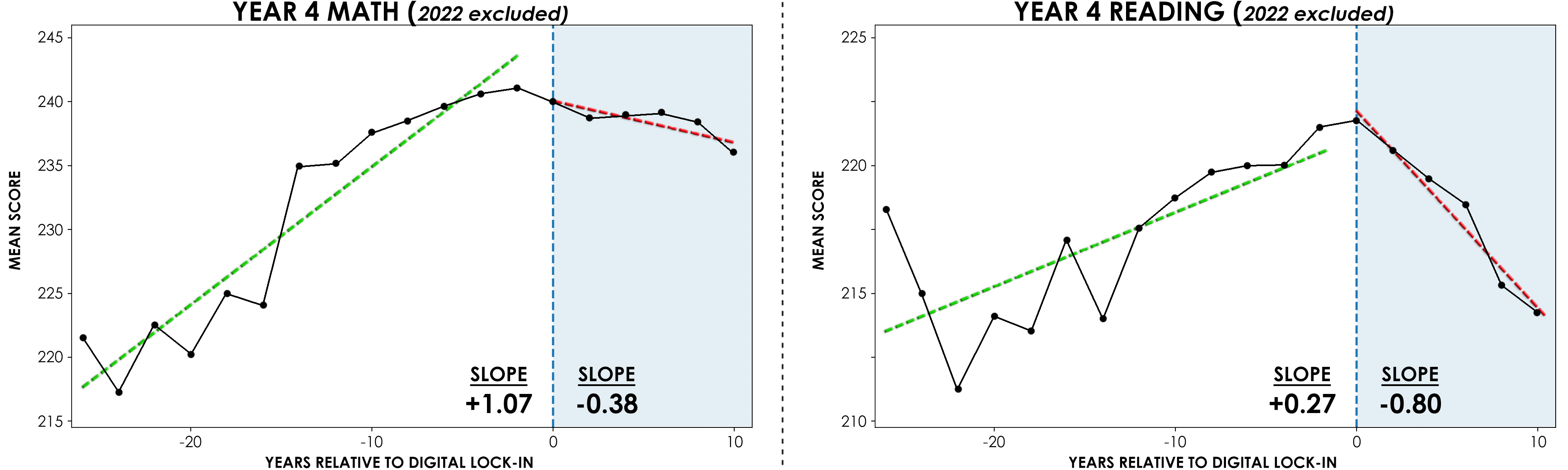
It's harder to dismiss as coincidence a pattern—like diminished learning with technology adoption in schools—when it re-occurs at different times and places. Yet that's exactly what happened when different US states adopted education technology at different times. The common pattern? Scores were rising prior to adoption, and fell afterwards.
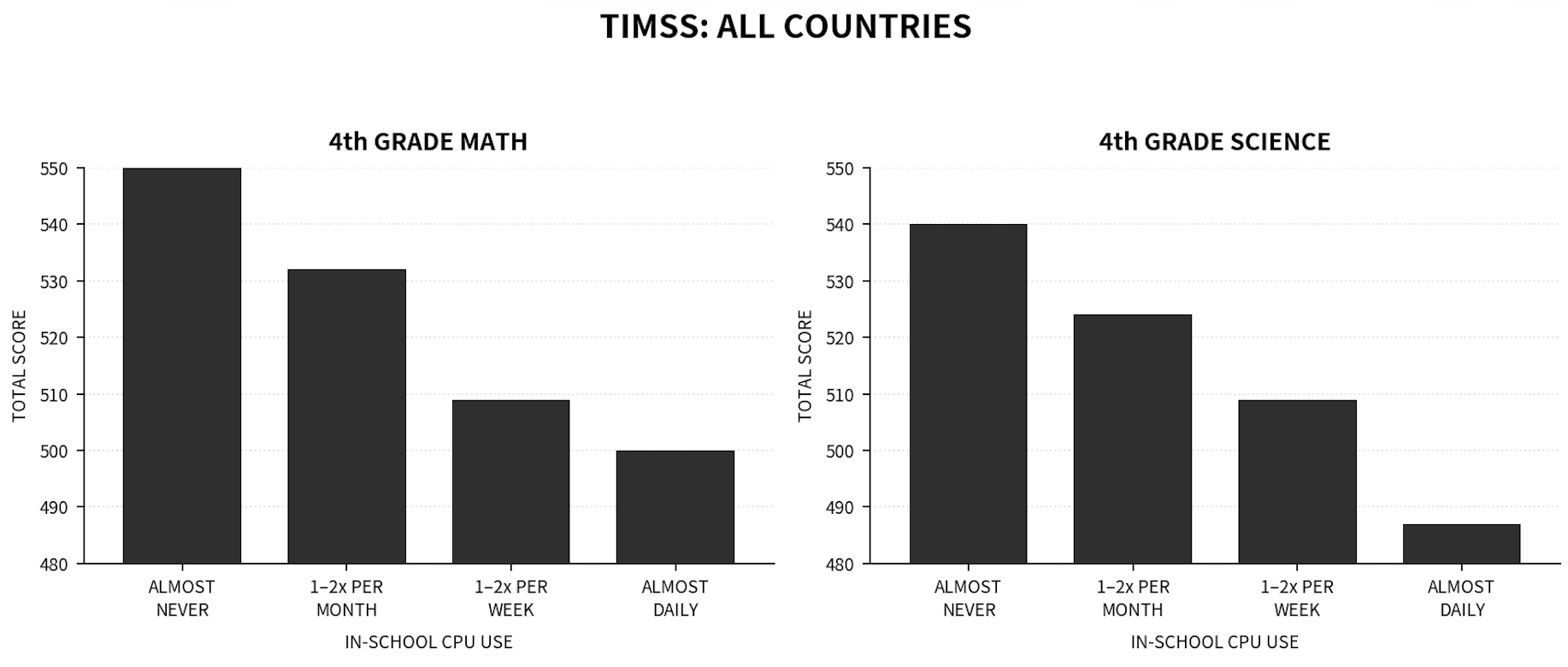
Similar patterns are observed on international standardized tests like PISA (the Program for International Student Assessment), TIMSS (Trends in International Mathematics and Science Study), and PIRLS (the Progress in International Reading Literacy Study), where scores decline with increasing in-school computer use.
How Children Learn Best
Attention: Screens are designed for multi-tasking. Students need practice working distraction-free so they can build the sustained focus and concentration needed to succeed.
Memory: Hand-written notes strengthen retention better than digital formats.
Relationships: Humans usually learn best from other humans. Face-to-face interactions are important for building empathy, listening abilities, and critical thinking.
What We Can Do
Limited & Intentional Screen Use: Devices should be used only for specific purposes where they are the best among tools. They should never be the default. WRDSB's new opt-in policy for Chromebooks is a positive development.
Prioritize Offline Skills: Traditional pencil-and-paper, handwriting, and face-to-face conversations should be the default educational tools.
Restore Analog Homework: Learning is reinforced by different modes and locations. If everything's on a screen, students will be lost when faced with problem-solving in the real-world. Restoring paper homework—even small amounts at young ages—can help reinforce learning, break tech dependency, and involve parents.
Get involved